Sunday, August 14, 2022

THE JOURNEY OF SEVENTY-FIVE YEARS

We all know that we are going to celebrate the 75th year of Independence and on this occasion, I am going to tell you about a journey of seventy-five years. The journey of seventy-five years started with the partition. It caused millions of lives. Many were displaced and became refugees in their own countries. More than seventy-five thousand women were raped. Trains full of dead bodies traveled across the border in both countries.  It was a devastating incident where one side there was communal violence and another side was human displacement.
     
 The next journey started with the constitution-making and vision of democracy. On 26 January 1950, the Constitution came into effect, and India was declared a " Sovereign Democratic Republic". India became democratic with the first general election(1951-1952) held successfully in which Jawaharlal Nehru was chosen as the first prime minister of India with 45 percent of the total votes polled. From then, the 17th Lok sabha was elected in May 2019. Decentralization of power in the hands of local people through panchayat elections shows the true nature and spirit of democracy in India.
India gained independence from British rule on August 15, 1947. Having attained political freedom, India‘s founding fathers had a path before them full of challenges both on social and economic fronts. The political leadership started the journey with hopes of making the country self-reliant in economic and political terms.

Initially, famines and hunger would push India to take external help many times for its food security. Illiteracy was another big laggard for the economy. At the time of independence, India‘s population was about 34 crore and the literacy rate was just 12 percent or about 4 crores. Among other challenges were low economic capacity due to stagnant agriculture growth and a poor industrial base.
Decades after independence, India’s former prime minister Manmohan Singh once famously said: “The brightest jewel in the British Crown” was the poorest country in the world in terms of per capita income at the beginning of the 20th century.

Since the country got freedom in 1947, it has gone through many ups and downs in its economy like an agrarian crisis, three wars, the 1991 privatization move, demonetization, and the introduction of Goods and Service Tax (GST), etc.
 
the journey of the Indian economy:
1951: Former Prime Minister Jawaharlal Nehru presented the First Five-Year Plan to Parliament. It was based on the Harrod–Domar model with few modifications. Its main focus was to develop the core industrial sector of the country.

1969: India went through its worst droughts in the 1960s, and it had to depend on the outside world for food and grain supplies. But the crisis came as a blessing in disguise and the country understood the importance of developing self-sufficiency in food grains hence, the Green Revolution became a reality.

1991: The golden phase of India’s economic journey began that year. With the devaluation of the currency, and the rising fiscal deficit of the government, India’s external debt nearly doubled from some $35 billion at the end of 1984-85 to $69 billion by the end of 1990-91. Foreign exchange reserves had dried up to the point that India could barely finance three weeks' worth of imports.

The government of PV Narsimha Rao as prime minister and Manmohan Singh as finance minister announced a series of policies that changed the face of the Indian economy – liberalization, privatization, and globalization in 1991.

2008: An epic financial and economic collapse was seen after the largest bankruptcy in US history – the meltdown of Lehman Brothers. While the other countries were facing the worst, economic growth in India during FY2008-09 stood at 6.7 percent. Reportedly, India was less impacted as its exports accounted for just 15 percent of the GDP.

2016: The word “demonetization” was introduced in the annals of India’s economic history. Prime Minister Narendra Modi on November 8 of that year declared that Rs 500 and Rs 1,000 notes would not be legal tender. Just months after demonetization, Parliament passed a crucial bill on Goods and Services Tax (GST).

2020: The country witnessed another jolt in the form of the coronavirus pandemic. According to a report, the first wave of the COVID-19 pandemic pushed 23 crore people below the poverty line. The report said there has been a rise of 15 percent in poverty in rural India and a rise of 20 percent in urban India during the last pandemic year. According to reports, India's economy, currently at $3.17 trillion, is expected to become the fifth largest in the world in 2022. In 75 years of independence, India has achieved good progress in economic, social, cultural,  space and technology, medicine, and sports. We became self-sufficient in foodgrain production.  The total food production, which stood at 54.92 million tonnes in 1950, rose to 305.44 million tonnes in 2020-21. It has built a modern economy (second fastest growing economy), remained a democracy, lifted millions out of poverty, has become a space and nuclear power, and developed a robust foreign policy. In its 75 years of independence, India has several achievements to its credit. India's literacy rate rose from a mere 18.3 percent in 1951 to 77.7 percent in 2017-18. The substantial rise in female literacy rate is worth noting - from just 8.9 percent in 1951 to 70.3 percent in 2017-18. India's sex ratio -- the total female population per 1,000 males -- stood at 946 in the 1951 census. In 2021, the sex ratio read 1,020 females for every 1,000 males, which put India on par with several developed nations. India's dreams of a 5 trillion economy, self-reliance, and superpower will become real only when we Indians do our duty with integrity, love, and devotion.

Tuesday, August 2, 2022

💡 Thought 💡

We are an accumulation of ideas, thought, beliefs, and knowledge. We are nurturing by our parents and society since birth. What we think, what we do are all the result of accumulation. We don't know exactly what we really are but we are just doing. It symbolizes that we are the product of the previous generation. They produce us in the same way as they were produced by their parents and society. So copy and paste system is going on even today on large scale.  What We need to understand here is who we are? And what we are doing?  Now, you have to think 🤔  about this. 

Friday, December 31, 2021

WELCOME IN THE NEW YEAR

The last Sun of the year sets amidst omicrons and now we are entering into 2022 amid a pandemic. So don't think more about this. Let's celebrate the new year with new knowledge. Each one celebrates the happy new year but very few of them know about the calendar. Do you know? The word calendar came from the Roman word ' calends' or ' kalends' meaning a way of allocating time into certain periods adopted for the purpose of civil life. CALENDAR help you visualize your daily schedule and remind you of important events. What if there was no calendar? Think 🤔 about it.

The Saka Era marked the beginning of the Saka Samvat, a historic Hindu calendar that was later introduced as the ‘Indian National Calendar’ in 1957. The Saka Era is believed to was founded by King Shalivanhana of the Shatavahana dynasty. The Saka calendar consists of 365 days and 12 months which is similar to the structure of the Gregorian Calendar. The first month of the Saka Samvat is Chaitra which begins on March 22 which corresponds with March 21 during the leap year.
Saka Samvat Gregorian Calender
ChaitraMarch 21 – April 20
VaishakhaApril 21-May 21
JyeshthaMay 22-June 21
AshadhaJune 22- July 22
ShravanaJuly 23-AugustBhadr
BhandraAugust 22-September 22
AshwinSeptember 23-October 22
KartikaOctober 23-November 21
AgrahayanaNovember 22-December 21
PaushaDecember 22-January 20
MaghaJanuary 21- February 19
PhalgunaFebruary 20-March 20/21

Facts about National Calendar of India / Saka Calendar

  1. It is a historical calendar era corresponding Julian's year 78.
  2. It is also known as Shalivahana Saka era or Mahasakkarat Era.
  3. Saka era marks the remembrance of King Shalivahana’s chief military triumphs.
  4. The first indication of a relationship between King Shalivahana and the Saka era was authenticated by the Kannada work Udbhatakavya by Somaraja.
  5. The Saka calendar is used also by the Indonesian Hindus in Bali and Java.
  6. The Gazette of India uses this calendar along with the Gregorian Calendar.

VIKRAM SAMVAT

The Vikram Samvat also regarded as the Vikrami calendar is a historical calendar for the Hindus in India. Vikram Samvat is also the official calendar of Nepal and is named after king Vikramaditya. This calendar came into focus after the 9th century with the beginning of epigraphical artwork. Before the 9th century, the same calendar system was known with other names such as Krita and Malava.

Some of the unique features of the Vikrami calendar are mentioned below:

  1. It marks the beginning of the Vikrama era that prevailed in India and Nepal.
  2. The period is named after King Vikramaditya to mark his triumph over the Saka rulers.
  3. It started at 57 B.C. before the 9th century with Vikramaditya.
  4. This is a calendar based on the movement of the moon and has 354 days in a year.
  5. The Vikram Samvat has 12 months with each month divided into two phases:
  • Shukla paksha (15 days) – begins with the new moon and ends with a full moon
  • Krishna paksha (15 days) – begins with a full moon and ends with the new moon

Division of a year in Vikram Samvat

The first day of the Vikram Samvat calendar is celebrated after Diwali in Gujarat and Maharashtra. The Vikram Samvat is similar in design to the Gregorian calendar and has been used by the Hindus and the Sikhs. This calendar system is one of the lunisolar calendars developed by ancient human cultures. It uses the lunar months and solar sidereal years for the division of a year.

The 12 months of Vikram Samvat that correspond to the 12 months of the Gregorian Calendar are mentioned in the table below:

Vikram Samvat Gregorian Calendar
BaishakhApril-May
JesthaMay-June
AshadhJune-July
ShrawanJuly-August
BhadraAugust-September
AshwinSeptember-October
KartikOctober-November
MangsirNovember-December
PoushDecember-January
Magh January-February
FalgunFebruary-March
ChaitraMarch-April

Hijri/Hijra calendar

The Hijri calendar is an Islamic lunar calendar consist of 12 lunar months and 354/355 days. The Hijri calendar is used to determine the Islamic holidays and rituals such as the annual period of fasting and the pilgrimage time to Mecca.

Some of the important facts about the Hijri calendar are mentioned below:

  1. The Islamic year began in AD 622 during which the migration of Prophet Muhammad from Mecca to Medina, known as the Hijra happened.
  2. The Islamic year has 12 months that are grounded on a lunar cycle.
  3. It has 354 days.
  4. It is used to date events in many Muslim countries simultaneously with the Gregorian calendar.
  5. Muslims everywhere in the World use this calendar to decide the proper days on which to observe Ramadan, to attend Hajj, and to celebrate other Islamic festivals.
  6. There are 12 months in the Hijri calendar which are mentioned below:
    • Muharram
    • Safar
    • Rabia Awal
    • Rabia Thani
    • Jumaada Awal
    • Jumaada Thani
    • Rajab
    • Sha’ban
    • Ramadan
    • Shawwal
    • Dhul-Qi’dah
    • Dhul-Hijjah

Gregorian Calendar

The Gregorian calendar which was developed as a correction to the Julian Calendar was introduced in October 1582. This calendar is named after Pope Gregory XIII and is the most used calendar in the world. This calendar determines the Earth’s revolution around the Sun and spaces leap years to make the average year 365.2425 days long.

Some of the unique features of the Gregorian calendar are:

  1. The Gregorian calendar is used as the civil calendar. 
  2. It began to be used from  1582.
  3. It is named after Pope Gregory XIII, who introduced the calendar.
  4. It substituted the earlier Julian calendar because the Julian calendar had a miscalculation regarding leap year.
  5. The Julian year had 365.25 days.
  6. The Gregorian calendar sustained to employ the Julian months.
    • January
    • February
    • March
    • April
    • May
    • June
    • July
    • August
    • September
    • October
    • November
    • December


Tuesday, November 2, 2021

DEEPAWALI

We all know that  Deepawali is celebrated in the month of Kartik and it symbolizes the victory over darkness, good over evil, and knowledge over ignorance, and also  Deepawali originates from Sanskrit words deep( lamp) and vali( row). It means " row of light". This festival is celebrated by lighting earthen lamps but very few know why we celebrate Deepawali?
We don't celebrate Diwali just to mark the return of Lord Rama to Ayodhya. Here are 11 other reasons why the festival of lights is celebrated.

Diwali or Deepawali is the festival of lights celebrated across the country. The festival of lights which is celebrated in the month of Kartik usually lasts five days, starting from Dhanteras, followed by Narak Chaturdashi (Chhoti Diwali), Lakshmi Pujan (Badi Diwali), Govardhan Puja and Bhai Dooj

Rama's return to Ayodhya after Ravana's defeat

ram
According to the Hindu epic Ramayana, Lord Rama, his brother Laxmana and wife Sita returned to Ayodhya after a period of 14 years in exile after defeating demon king Ravana.

Krishna killed Narakasura

narkasura
In Dwapara yuga, Lord Krishna, an avatar of Lord Vishnu, killed demon Narakasura, the evil king of Pragjyotishapura, near present-day Assam, who had held 16,000 girls in captivity. In Braj region in northern India, parts of Assam, as well as southern Tamil and Telugu communities, Narak Chaturdashi is viewed as the day on which Krishna killed Narakasura.

Pandava's return to Hastinapur

pandavas
The five Pandava brothers had been tricked into losing a bet in gambling after which their Kaurava cousins banished them for 12 years. The Pandavas returned to Hastinapur on Kartik Amavasya, as per the Hindu epic Mahabharata.

Goddess Lakshmi's birth

samudramanthan
As per another popular tradition, Diwali is celebrated as the day Goddess Lakshmi was born from Samudra Amntham, the churning of the cosmic ocean of milk by the gods and demons. On the night of Diwali, Lakshmi chose Vishnu as her husband and married him.

Vishnu rescued Lakshmi

It is believed that Lord Vishnu, in his fifth Vaman-avatar, rescued Goddess Lakshmi from the prison of King Bali. On this day, King Bali was banished to rule the netherworld on the order of Lord Vishnu.

Bandi Chhor Diwas

In Sikhism, Diwali is related to a historic event. Guru Hargobind, the sixth Sikh Guru, along with 52 other Hindu kings, was released from captivity by Mughal emperor Jahangir on the day of Diwali.

Mahavira Nirvana Diwas

In Jainism, the festival of Diwali is celebrated to observe the anniversary of Nirvana of Mahavira's soul, the twenty-fourth and last Jain Tirthankara of present cosmic age. Mahavira attained moksha (liberation) on Chaturdashi of Kartik month.

Maharshi Dayananda attained Nirvana

On the new moon day of Kartik, Maharshi Dayananda, founder of Arya Samaj, attained Nirvana.

Maharaja Vikramaditya's coronation

Legendary Hindu king Vikramaditya was crowned on Diwali. He is characterised as an ideal king known for his generosity, courage and patronage of scholars.

Kali Puja

As per the Kalikula sect of Shaktism, the day of incarnation of Kamalatmika, the last manifestation of goddess Mahakali, is celebrated as Kamalatmika Jayanti. It falls on the day of Deepawali. Kali Puja is celebrated in regions of Bengal, Mithila, Odisha, Assam, Sylhet, Chittagong and the town of Titwala in Maharashtra.

End of harvest season

According to another popular belief, Diwali may have originated as a harvest festival, marking the last harvest of the year before winter.

Diwali as New Year

In western states such as Gujarat and some northern Hindu communities of India, the festival of Diwali signifies the start of a new year.


Monday, August 30, 2021

FUN FACTS

1.
only a qualified electrician is allowed to change a light bulb in Victoria, AUSTRALIA 🦘.
2.
in Florida, it is illegal to pass wind in a public places after 6pm on Thursday.
3.
Milan in Italy states that it is a legal requirement to smile at all times except during funerals or hospital visits. Frowners could face a hefty fine.
4.
It is illegal to be fat in vaapn. In 2009, lawmakers set a maximum waistline for every an aged over 40 to control obesity, although there is no penalty for the same.
5.
some people regard chewing gum as ill-mannered but in Singapore it's a criminal offence to chew gum unless it's medicinal.
6.
flushing in toilets after 10 pm is illegal in Switzerland . The government feels this act adds to noise pollution.
7.
It is illegal to run out of fuel on the Autobahn in Germany.

Sunday, August 8, 2021

India at tokyo olympics 2020

For the first time in the country's history, Neeraj Chopra won an Olympic gold medalist in athletics. The dream of Milkha Singh has come true. Neeraj Chopra won gold in Men's javelin throw. India is elated after getting gold.Mirabai Chanu won a silver medal in weightlifting women's 49 kg. For India, this was the first medal in the 2020 Olympic Games. She is now becoming an inspiration for the whole of India.
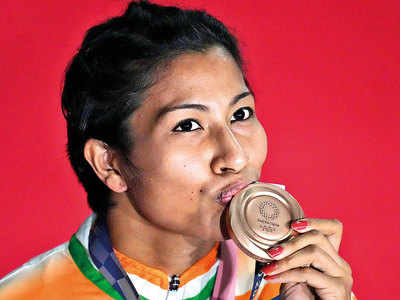
Ravi Kumar dahiya won a silver medal in wrestling men's 57 kg freestyle. He is only 23 years old. His purpose was to win gold but at the last moment, he lost. MuLovalina bargohain won bronze in Boxing women's welterweight. She is the third Indian boxer to win a medal at Olympics. She is the first female athlete and the second boxer from Assam to represent the state in Olympics. After winning, she said, " Sapna gold ka hai". 
Pv Sindhu won bronze in Badminton. The first woman from India to win two consecutive individual Olympic medals. It shows the extraordinary skill, determination, and grit of PV Sindhu. she is the real tiger of India. Indian Men's hockey team created history by winning bronze after 40 years. We knew Once upon a time, there was a hockey team that defeated every team in the world in the captainship of Major Dhyanchand. But after 1980 no one focussed on the hockey team and this led to the failure of the hockey team. But winning bronze after 40 years hockey team proved we were, we are, we will. Navin Patnaik has a significant role in this new hockey team. When no one sponsored hockey then the Odisha government sponsored it and made it a perfect hockey team. Therefore, we need to thanks the Odisha government.Bajrang punia won bronze in wrestling men's 65 kg freestyle. He is the only Indian wrestler to win 3 medals at the world championships. 'We will take care of the injury later, remove the brace for now' Bajrang punia told the physio before winning the Olympic bronze. This determination and courage of punia made him the bronze winner.

For India, the story of the Tokyo Olympic 2020 is started from silver and ends with gold. 4 bronze, 2 silver, and 1 gold describe the historic performance of India at the Olympics. When I look at the Tokyo Olympics 2020, I think this is the evergreen performance of India yet. 

Sunday, August 1, 2021

Lateral Entry

FATHER OF MISSILE TECHNOLOGY IN INDIA.FATHER OF GREEN REVOLUTION IN INDIA FATHER OF WHITE REVOLUTION IN INDIAFATHER OF SPACE TECHNOLOGY IN INDIAFATHER OF TELECOMMUNICATION REVOLUTION IN INDIA.

I fully support lateral entry in our established system because it leads to an increase in productivity of the country's development. The government needs to allow those who have professionally mastered the things and expert. 
As we see in the past the five biggest achievements of India which are discussed above are lead by professionals not by civil servants. Therefore, we can see the result in these five sectors. This is my opinion about the lateral entry on senior governments posts.
 What's your opinion on this?